

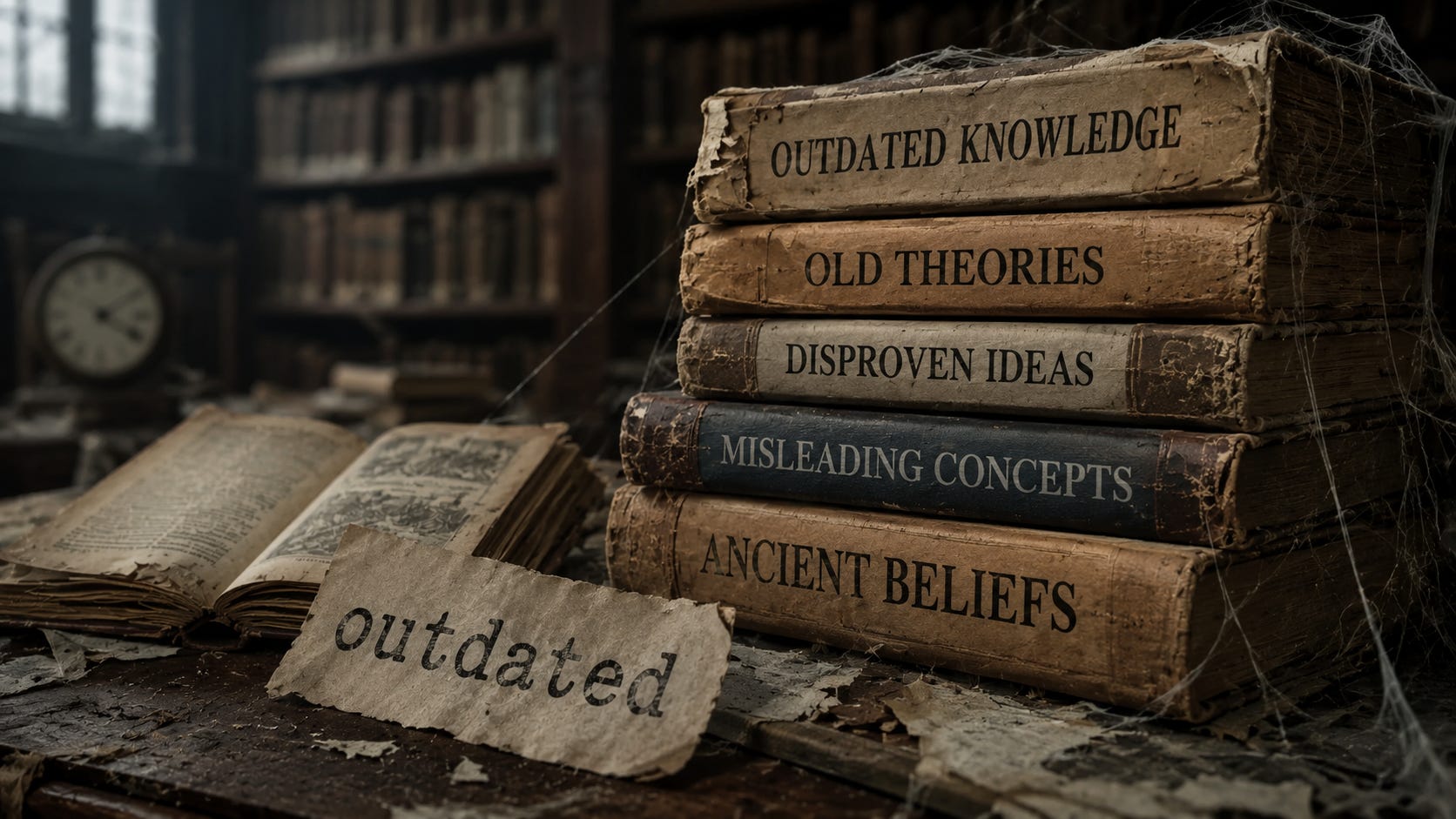
Somewhere in your mind, sitting quietly between memories of your childhood phone number and the Pythagorean theorem, is a library of beliefs you’ve never once questioned. You opened them long ago, filed them under “settled,” and moved on. You haven’t touched them since. Some of them are fine. Others have been quietly rotting for years, and you’re still making decisions based on them.
Not all knowledge ages at the same rate. Some of what you learned is still as true as the day you learned it. Some of it expired five years ago — and you haven’t noticed. The dangerous category is the knowledge you treat as permanent that is actually perishable. And in a world accelerating as fast as this one, that category is growing faster than most of us are willing to admit.
The Three Shelf Lives of Knowledge
Think of knowledge in three categories, each with a different shelf life.
The first is permanent knowledge — logic, mathematics, physical constants, the rules of grammar in a dead language. The speed of light doesn’t renegotiate. Two plus two will not change at the next software update. This knowledge was earned once and never needs to be re-examined. It’s the bedrock.
The second is slow-decay knowledge — history, psychology, human nature, leadership principles. It doesn’t expire overnight, but it does evolve. What we understood about motivation in 1985 is not wrong, exactly, but it’s incomplete. Abraham Maslow’s hierarchy of needs hasn’t been disproven, but it’s been enriched, challenged, and recontextualized by decades of neuroscience. Treat this knowledge as a living document, not a granite monument.
The third is fast-decay knowledge — and this is where most people are sleepwalking. This is the category that includes everything technology touches, everything markets determine, everything culture negotiates. If you learned how to build a website in 2008, you didn’t just learn outdated techniques — you may have learned an entire philosophy of design that is now actively harmful. If you understand “social media strategy” from 2015, you understand something that doesn’t exist anymore. These weren’t lessons. They were snapshots.
The Map That No Longer Matches the Territory
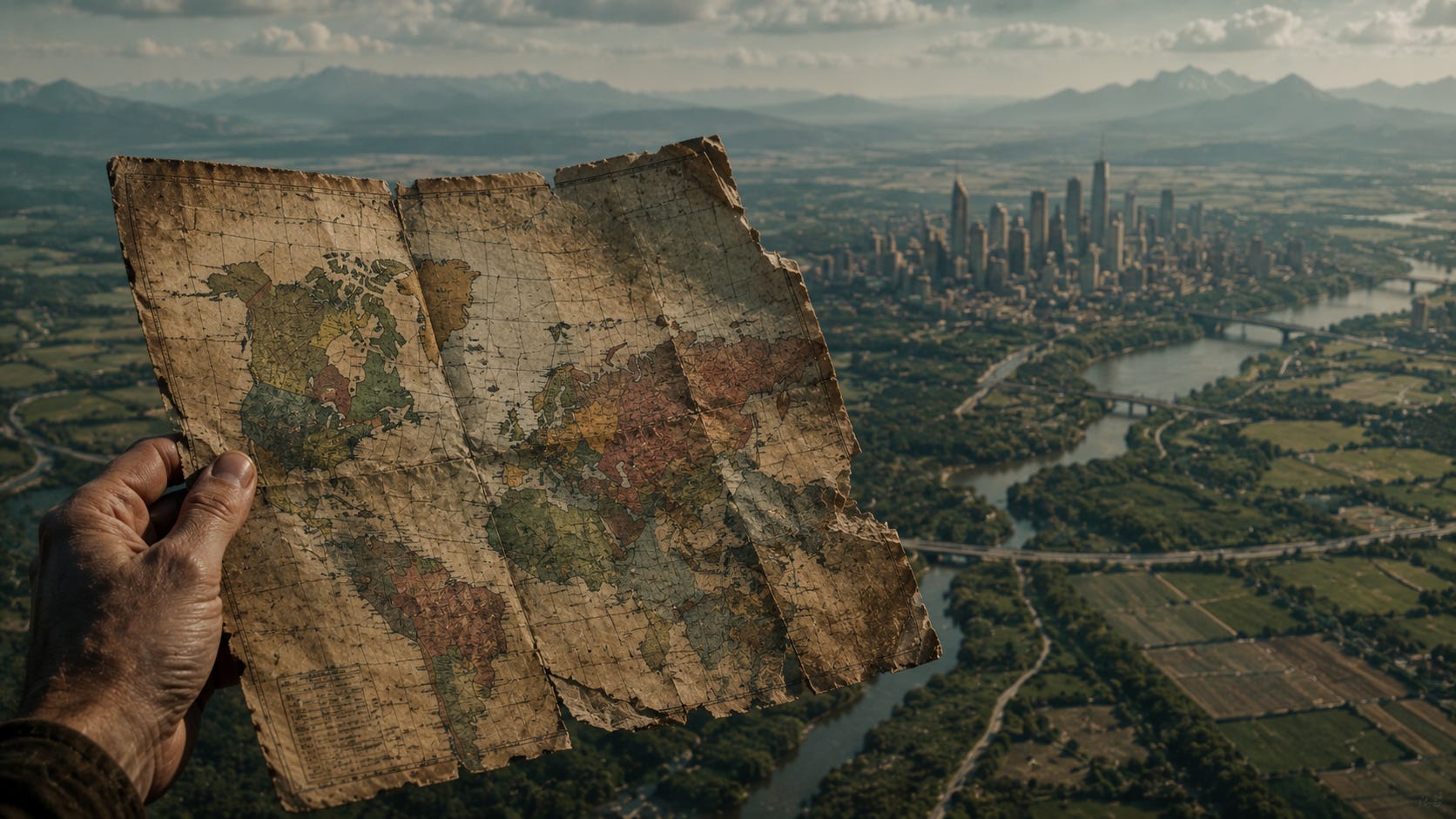
Here’s a vivid way to think about it: imagine you’re navigating a city using a map from 2001. The major highways are probably still there. The river hasn’t moved. But a dozen new neighborhoods have appeared. Three major roads have been rerouted. Half the landmarks you’d use as orientation points have been demolished and replaced with something else entirely.
You could still get around. You’d mostly know where you are. But in the critical moments — the turns that matter — you’d be wrong in ways you couldn’t predict.
That’s what outdated knowledge does. It doesn’t make you incompetent. It makes you confidently wrong at the worst possible moments.
A doctor trained in 2002 who treats diabetes based exclusively on what she learned in medical school is not treating the same disease the same way the evidence now recommends. A financial advisor who learned bond strategies in 1999 is working with a mental model built before three rounds of quantitative easing rewrote the rules of fixed income. A manager who learned leadership from a bestselling business book in 2010 is applying a framework built before hybrid work, the gig economy, and AI-assisted productivity fundamentally changed what “a team” means.
None of these people are stupid. They’re just running on expired maps.
The Confidence Trap
The most insidious part of this is that old knowledge feels like wisdom. You’ve had years to test it, reinforce it, and see it confirmed through the lens of your own experience. It has the weight of time. It doesn’t feel like a liability — it feels like an asset.
This is the confidence trap. The longer you’ve held a belief, the more certain you are that it’s true, and the less likely you are to re-examine it. Certainty and accuracy are not the same thing. Certainty is a feeling. Accuracy is a relationship between your model of reality and reality itself. The two can drift apart without you ever noticing.
Consider what happened to the retail industry. For decades, the accumulated wisdom of retail was built around foot traffic, location, and in-store experience. “Retail is real estate” was practically doctrine. Executives who had spent thirty years mastering that doctrine didn’t fail because they were bad at retail. They failed because they were extraordinarily good at a game that had stopped being played.
Building a Knowledge Expiration Practice
The answer isn’t cynicism — it’s not “trust nothing” or “assume everything is wrong.” The answer is building what I call a knowledge audit practice: a regular, deliberate review of the assumptions you’re using to navigate your professional and personal life.
Here’s how to start.
Pick one domain every quarter — marketing, finance, management, health, technology — and ask yourself: What do I believe to be true in this area that I have not verified in the last three years? Write those beliefs down. Then go test them. Read recent primary sources. Talk to practitioners actively working in that space today. Look for evidence that contradicts what you believe, not just evidence that confirms it.
Pay special attention to beliefs that feel obvious. “Of course social proof drives purchasing decisions.” “Of course diversification reduces risk.” “Of course college is worth the investment.” These are the most dangerous ones — not because they’re wrong, but because they’re truisms that stopped being universally true and nobody sent out an announcement.
Notice also when you defend a belief more vigorously than the evidence warrants. Defensiveness about an idea is often a signal that the idea is under threat from something you haven’t fully processed yet. That defensiveness is not a reason to hold the line. It’s a diagnostic tool pointing toward exactly where your audit should focus.
The New Competitive Advantage
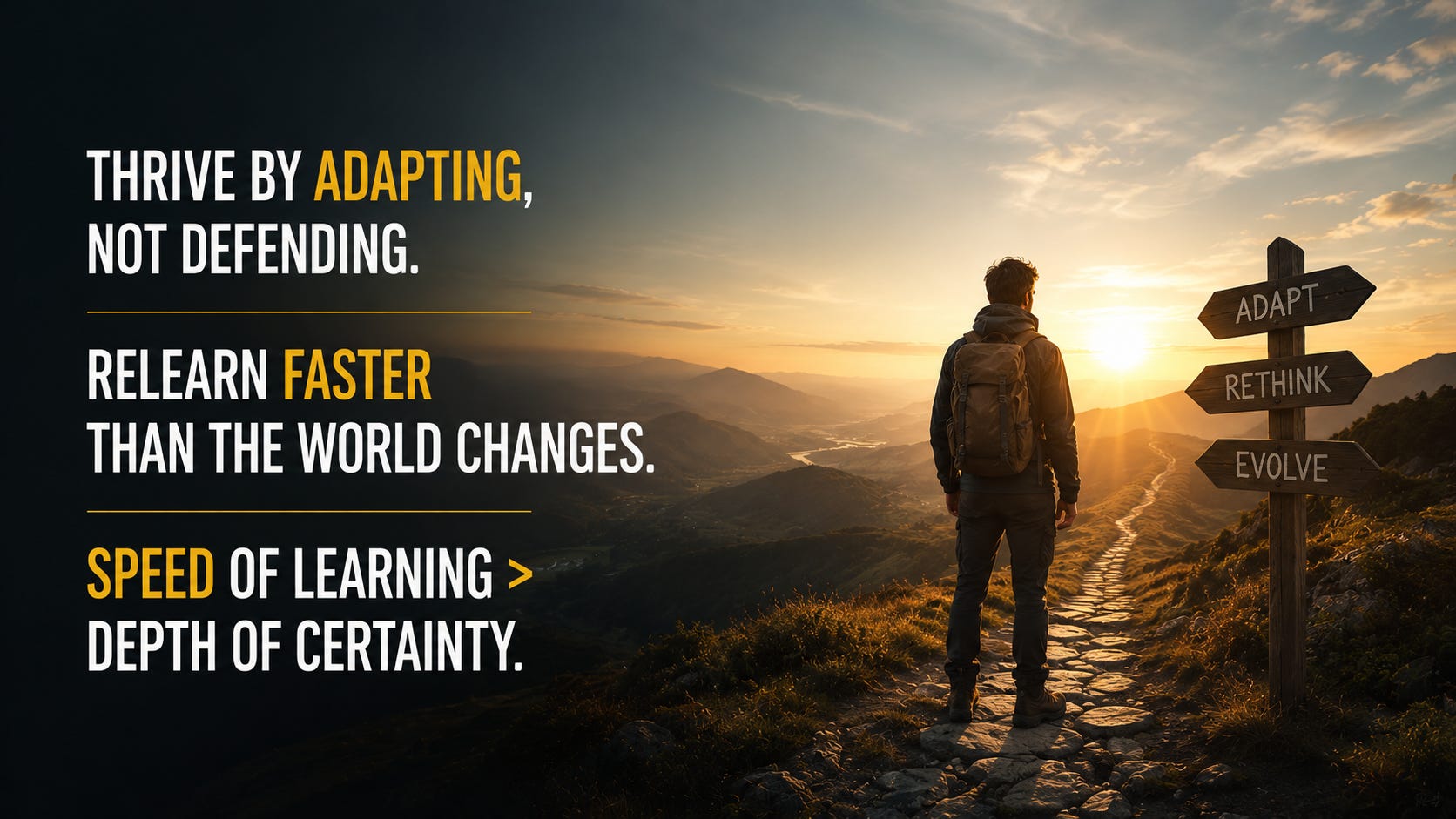
In the era I see approaching — one defined by AI co-intelligence, biological computing, and radical energy abundance — the single greatest competitive advantage will not be what you know. It will be how quickly you can identify what you need to unlearn.
The organizations and individuals who thrive will be the ones with the fastest knowledge recycling systems. They’ll hold their certainties lightly. They’ll mistake confidence for a working hypothesis rather than a final verdict. They’ll treat their mental models the way good software engineers treat their code — not as something to be protected, but as something to be continuously refactored.
Your brain is not a library. It’s a living model of reality. And like every model, it is only as useful as its last update.
Some of what you know is timeless. Some of what you know expired while you weren’t looking. The only way to tell the difference is to start looking — methodically, regularly, and without the comfort of assuming you already know which is which.
The future belongs to people who are willing to be wrong about what they used to be right about.
Related Articles
Harvard Business Review — Be Forewarned: Your Knowledge Is Decaying https://hbr.org/2012/11/be-forewarned-your-knowledge-i
MIT Sloan Management Review — What’s Your Edge? Rethinking Expertise in the Age of AI https://sloanreview.mit.edu/article/whats-your-edge-rethinking-expertise-in-the-age-of-ai/
Farnam Street — The Map Is Not the Territory https://fs.blog/map-and-territory/