
The Relevant Mother: The Irreplaceable Center of an Accelerating World
While the Future Races Forward, the Intelligence That Holds Everything Together Has Always Been Hers


The Invisibility Trap
There is a particular kind of disappearing act that happens to mothers, and it isn’t dramatic enough to make headlines. Nobody leaves. Nothing breaks. The mother simply becomes so load-bearing — so woven into the infrastructure of everyone else’s functioning — that she stops being seen as a person and starts being experienced as a system. The Wi-Fi of family life. Noticed only when she goes down.
This is a different threat than the one fathers face. Fathers, when they lose relevance, tend to lose it through distance — physical, emotional, or both. The gap is visible. It can be named, grieved, worked on. Mothers face something quieter and in many ways more insidious: erasure by volume. The sheer number of roles running simultaneously — nurturer, logistics coordinator, emotional interpreter, medical historian, social scheduler, conflict mediator, memory keeper — means that the person executing all of them becomes invisible behind the function. We see the clean lunch box. We don’t see the intelligence that produced it.
On this Mother’s Day, I want to argue something that goes beyond gratitude, though gratitude is entirely warranted. I want to argue that the specific cognitive and emotional capabilities that motherhood develops are not soft skills on the periphery of what the future will value. They are exactly the skills at the center of it. And that the world is only beginning to understand how rare and irreplaceable they are.
The Intelligence Nobody Is Measuring
Let’s be precise about what we’re talking about, because vague praise is another form of invisibility.
Motherhood, done with genuine presence, develops a suite of capabilities that researchers in organizational behavior, artificial intelligence, and cognitive science are increasingly struggling to replicate or even adequately describe. The first is what might be called parallel emotional processing — the ability to hold multiple people’s inner states simultaneously and respond to each with appropriate calibration. A mother managing a dinner table where one child is anxious about tomorrow’s exam, another is nursing a social wound from recess, a partner is processing a difficult work day, and the youngest simply wants to be held — and doing this while also tracking whether the pasta is done — is performing a feat of distributed emotional intelligence that no current AI system comes close to matching.
The second capability is the detection of what isn’t being said. Any experienced mother will tell you that the most important information in her household is almost never spoken directly. The child who is fine is not fine. The silence after school means something specific. The tone of “okay” carries a payload of subtext that takes years to learn to read accurately. This is not intuition in the mystical sense. It is pattern recognition built on thousands of hours of close, emotionally invested observation of specific human beings across time. It is expertise. It happens to be expertise we have not, as a culture, built frameworks for credentialing.
The third capability is what I’d call relational code-switching — the ability to engage with the same situation from completely different emotional registers depending on who you are talking to. A mother does not speak to a three-year-old, a thirteen-year-old, and a grieving parent the same way. She shifts her entire communicative posture — her vocabulary, her pacing, her emotional temperature, the ratio of listening to speaking — not as performance, but as a genuine recalibration of presence. This is the thing executive coaches charge considerable sums to try to teach. Mothers develop it by necessity.

What AI Cannot Do Here
This is where the argument sharpens, because we are in a moment when a great deal of human capability is being successfully automated, and it matters to be honest about what is and isn’t in that category.
AI systems are becoming genuinely remarkable at tasks that involve pattern recognition across large structured datasets, language generation at scale, diagnostic reasoning from explicit symptoms, and optimization problems with defined parameters. These are real and significant capabilities, and they will displace a wide range of cognitive labor in the coming decade.
What they cannot do — and what the research increasingly suggests they cannot be simply trained into doing — is hold genuine emotional stake in a specific person’s wellbeing over time. The mother who knows her child’s baseline, who can feel when something is 4 percent off from normal before there is any articulable evidence, who carries in her body the accumulated emotional history of a relationship — she is not doing computation. She is doing something that requires a continuous, embodied, invested presence that has no algorithmic equivalent.
The future will increasingly be divided between tasks that can be automated and relationships that cannot. The intelligence of motherhood lives entirely in the second category. That is not a consolation. That is a structural advantage in an economy that is burning through automatable skills and will increasingly pay a premium for what remains.
The Gap That Wasn’t a Gap
Now let’s talk about the professional dimension, because this is where the argument has the most immediate practical consequence.
Millions of mothers return to the workforce after periods of full-time caregiving and are told — explicitly by resume advice, implicitly by interviewers’ expressions — that they have a gap to explain. An absence to account for. Something that needs to be papered over or apologized for. This framing is so normalized that many mothers have internalized it themselves, describing years of extraordinarily demanding and developmentally rich work as “time off” or “out of the workforce.”
Let’s be direct: this is a mislabeling with real economic consequences.
A mother who spent three years as the primary caregiver for young children while managing a household was not resting. She was operating in a continuous, high-stakes environment requiring real-time decision-making under uncertainty, stakeholder management with zero tolerance for error, resource allocation under constraint, crisis response, negotiation, emotional regulation under duress, and the kind of long-horizon relationship investment that the best leaders in any field spend careers trying to develop. The fact that she was not compensated for this work does not make it less skilled. It makes it more remarkable.
The reframe is not spin. It is accuracy. When a mother returning to work describes what she actually did — not “I took time off to raise children” but “I developed a specific set of high-demand capabilities in an unstructured, under-resourced environment with high accountability and no margin for failure” — she is being more honest about her experience, not less. The burden of proof should not be on her to justify the time. It should be on the hiring culture to explain why it has spent decades systematically undervaluing the most sophisticated human development program ever designed.
The Center That Holds
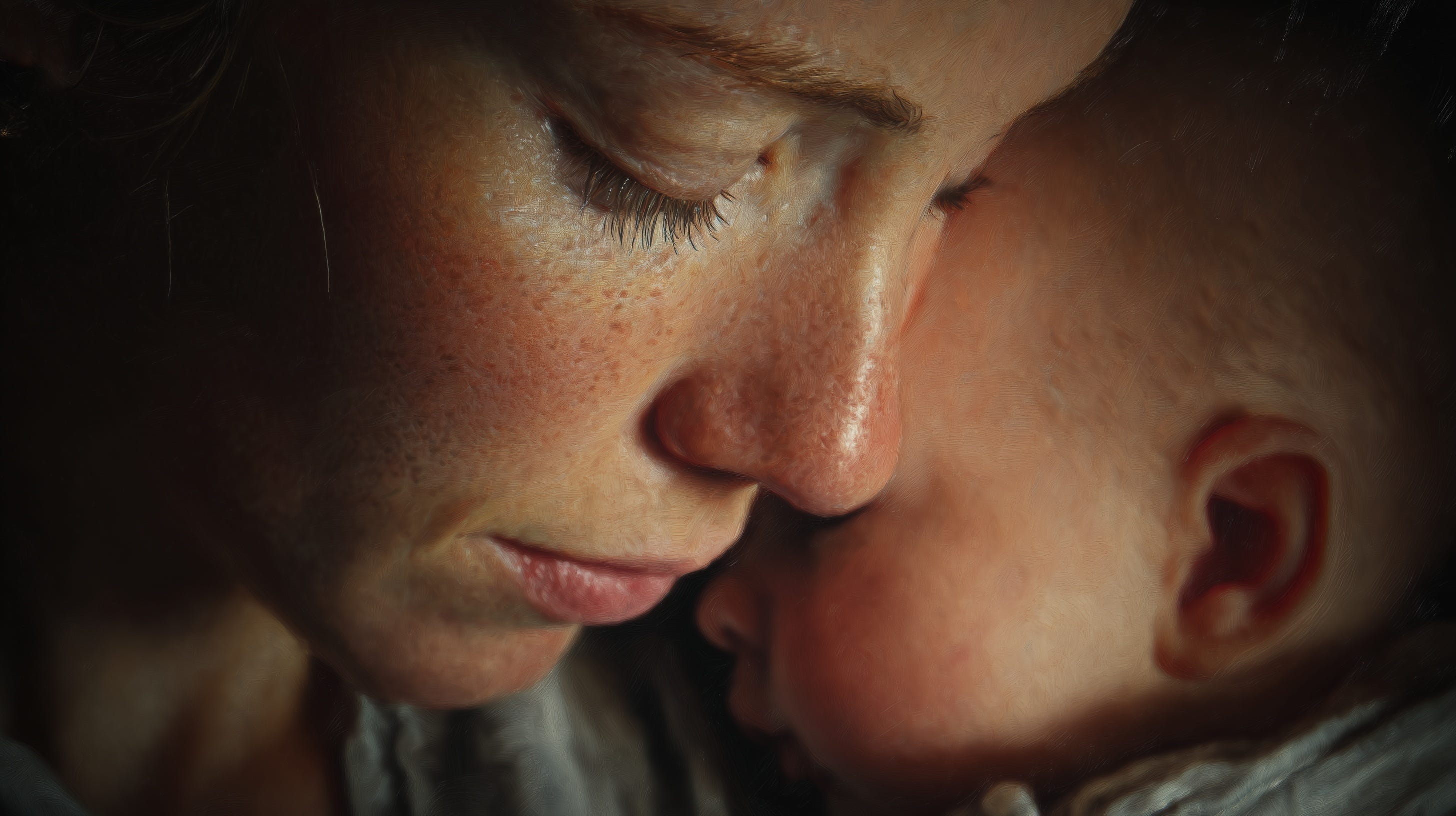
There is a line from W.B. Yeats, written in a very different context, that has always struck me as accidentally perfect for this conversation: “the center cannot hold.” He meant it as prophecy of collapse. I want to invert it. I want to suggest that the center — the person who holds the emotional, relational, and logistical core of a family together — is not a passive receptacle for everyone else’s needs. She is an active, skilled, continuously developing intelligence. And as the world accelerates, as AI handles more of what can be handled, as the premium on genuine human connection and presence rises sharply, the center becomes more valuable, not less.
The relevant mother is not relevant despite the domestic complexity she navigates. She is relevant because of what that complexity has built in her. The question for the rest of us — employers, institutions, partners, society — is whether we have the clarity to see it.
Happy Mother’s Day to every woman who has held the center, often without credit and sometimes without witness. What you have built in yourself matters more than the world has yet understood.
Related Articles
Harvard Business Review — The Broad Experience Women Bring to the Workforce After Caregiving https://hbr.org/2022/03/the-broad-experience-women-bring-to-the-workforce-after-caregiving
McKinsey & Company — Women in the Workplace 2024: The Emotional Tax of Being a Working Mother https://www.mckinsey.com/featured-insights/diversity-and-inclusion/women-in-the-workplace
MIT Sloan Management Review — Why Emotional Intelligence Will Outlast the AI Revolution https://sloanreview.mit.edu/article/why-emotional-intelligence-will-outlast-the-ai-revolution